

— Our Story
THINKING DIFFERENTLY
ABOUT HOW WE BUILD
BY MAURICE LAKE
Why I began thinking differently
Buildonix did not begin as a formal business plan or as an attempt to invent a single new building product. It grew gradually from a lifetime in building and construction, and from seeing first-hand how demanding, wasteful and unnecessarily complicated the industry can be.
I have always enjoyed making things and solving practical problems. Over the years, however, I kept questioning why construction remained so difficult to organise and predict. Every project was different. Even when the same people were involved, the design, site conditions, materials and sequence of work created a new workflow every time.
Progress could be disrupted by weather, missing materials, labour shortages, incomplete detailing or simply one trade not being available when needed. I began asking whether modern manufacturing principles could make building quicker, easier and more coordinated - with more of the work accurately prepared before it reached the site, less uncertainty during construction and no loss of architectural freedom.
Finding the Right Approach
When I first began exploring how construction could be done differently, I did not yet know exactly what form the system would take. The starting point was broader: could more of the building process be made controlled, repeatable and easier to manage by applying modern manufacturing principles?
The journey went through several stages, including a period investigating container-based housing. This showed us some of the advantages of controlled manufacturing, but also the limitations of beginning with a large, predetermined form.
Container construction could be expensive, required substantial factory infrastructure and relied heavily on specialised fabrication, particularly welding. However, that stage was still valuable. It produced useful ideas, including façade connection work that later became patented intellectual property, and helped clarify what we did and did not want the system to become.
Why Small Components Became Central
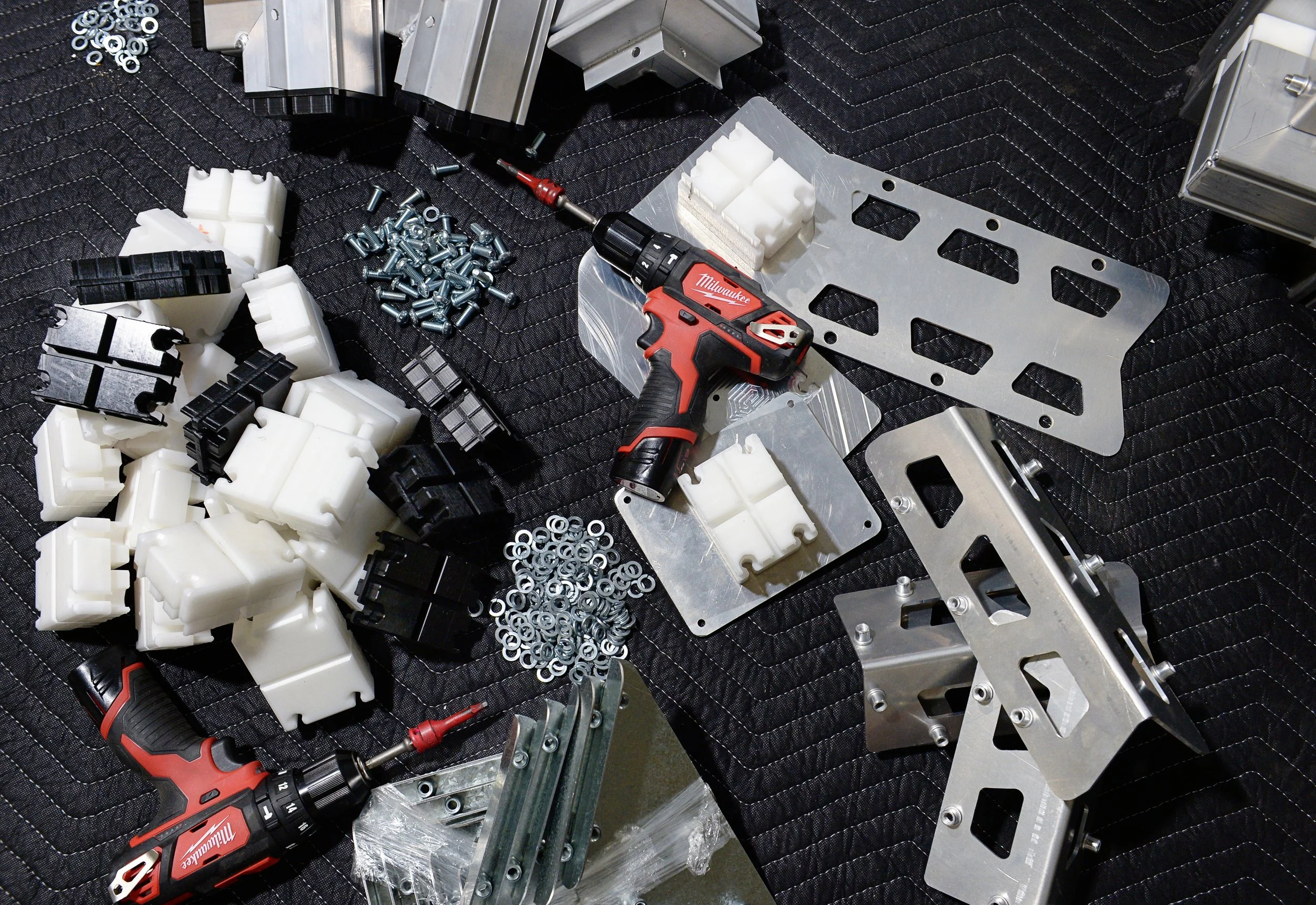
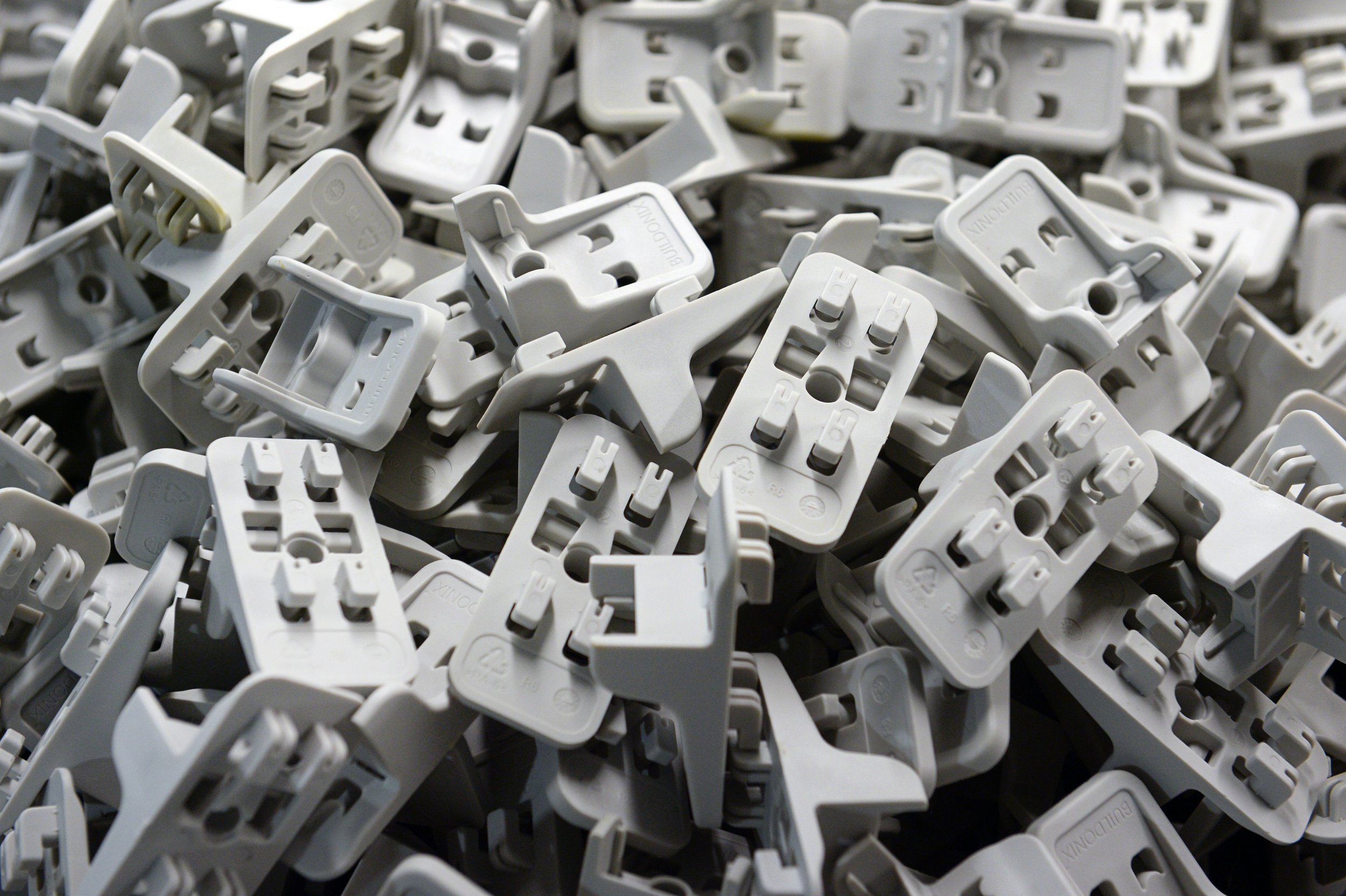
Through that process, it became increasingly clear that the answer was not necessarily to manufacture buildings as large modules or completed sections. Instead, the greater opportunity was to make the individual components smarter, lighter, more accurate and easier to assemble.
Small, manageable components can be manufactured accurately and repeatedly, packed efficiently, transported easily and assembled in locations where conventional construction may be difficult. They can also reduce the need for very large factories, specialised transport and major lifting equipment.
Most importantly, small components allow architecture to remain architecture.
A building does not need to be divided into a small number of standard boxes. A coordinated family of components can support different building sizes, shapes and appearances while still gaining the accuracy and efficiency of repeatable manufacturing.
The same component can be used across many different buildings, progressively refined and produced in increasing quantities. This can help reduce cost without requiring every building to look the same.
The concept continued to grow from there.
We engaged industrial designers, developed components and connection methods, tested ideas, refined them and tested them again. We worked through engineering and compliance requirements, sought professional advice, secured patents in Australia and key international markets, and ultimately completed a compliant Australian dwelling using the Buildonix system.
MORE THAN I ORIGINALLY IMAGINED
More than a building system
Using smaller, precision-manufactured components can reduce physical effort, cutting, noise, dust and waste on site. It can improve consistency, simplify the work and create the opportunity to design many common errors out of the construction process.
Even a good design can be weakened by poor interpretation, incomplete detailing or inconsistent workmanship. Too much can depend on someone standing on site and trying to work out what was intended. Buildonix takes a different approach: each component has a defined purpose and position, and wherever practical it should either connect correctly or make it clear that something is wrong.
What began as a physical construction idea has grown into a broader platform spanning component design, engineering, procurement, costing, manufacturing, logistics, construction assembly, quality assurance, training and digital information. Because components can be identified and recorded, each one can carry its own history - what it is, where it belongs, how it is installed, what it costs and how it may eventually be reused.
The same logic creates opportunities for cameras, sensors, robotics and artificial intelligence. Buildonix is based on coordinated components and repeatable actions, allowing it to evolve as technology improves. Materials and manufacturing can change between countries while the underlying component logic, digital coordination and controlled construction assembly remain.
Good for business and good for the planet
I believe commercial success and environmental responsibility should support one another. There is no reason a company cannot be profitable while doing something genuinely positive for the world. In fact, environmental solutions are most likely to be adopted at scale when they are commercially attractive as well as responsible.
Sustainability is not an extra feature added to Buildonix. Reducing waste, improving material efficiency, limiting site disturbance and creating opportunities for disassembly and reuse are part of the way the platform is intended to work. A building should not automatically become mixed demolition waste at the end of its first use. Wherever practical, components should be identifiable, removable, inspectable and capable of being used again.
That is better for the environment, but it may also create new commercial opportunities around component ownership, refurbishment, resale, reverse logistics and the long-term management of building materials. The environmental and commercial benefits can strengthen one another.